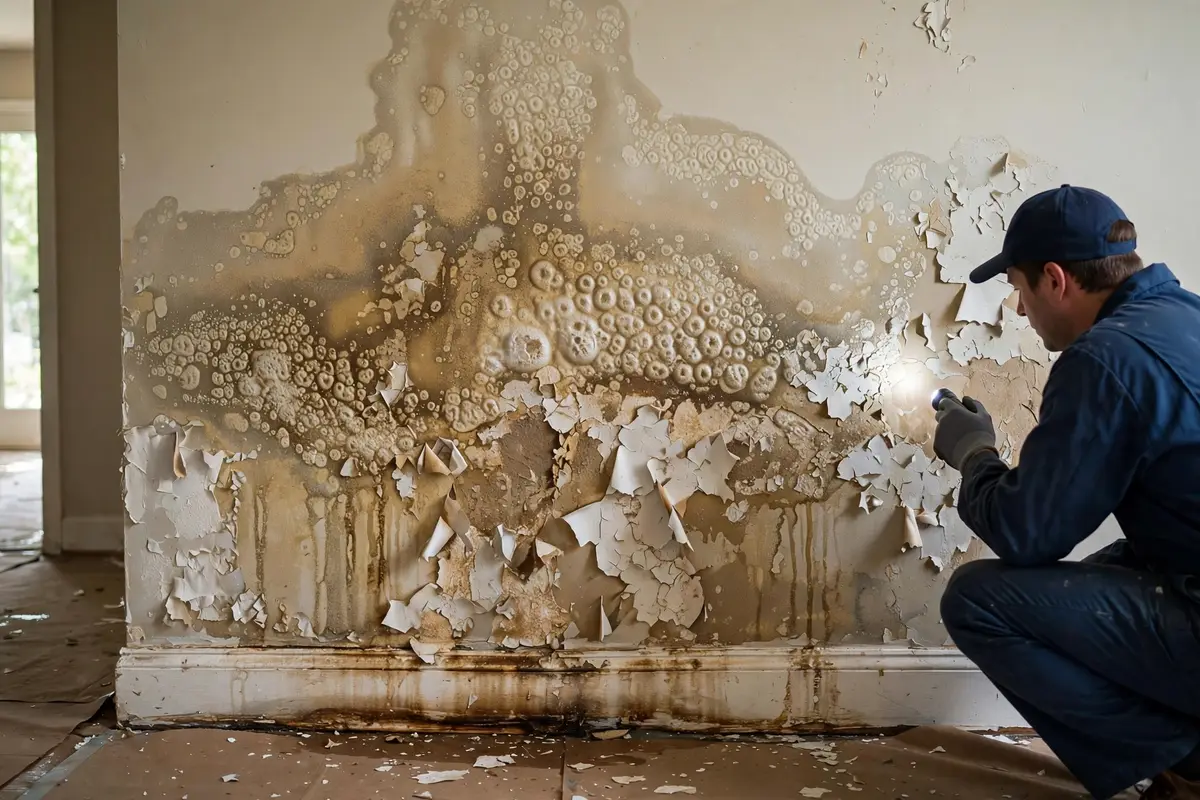
Professional water leak detection for Bradenton and Manatee County homes.
Water leak detection finds hidden leaks anywhere in your home, not just under the slab. Technicians use moisture meters, a meter test on your water supply, and thermal imaging to trace dampness in walls, ceilings, and yards back to its source in Bradenton homes, then explain the repair options clearly. Call (941) 307-1712
Not every hidden leak lives under the slab. Supply lines run through walls and ceilings, drain lines hide behind cabinets, and service lines cross yards, and any of them can leak quietly for weeks. Whole home water leak detection works systematically: confirm water is being lost, isolate which system is losing it, then trace that system until the source is found. Bradenton homeowners often start with a high bill or a musty room and no visible water. A structured search turns that mystery into a located, repairable problem.
The search respects how Bradenton homes are built. Slab-on-grade houses route much of their plumbing low, but second story additions, remodeled kitchens, and re piped sections put lines in walls and attic spaces too. Ranch homes from the 1950s to the 1970s may have original galvanized lines mixed with newer copper and plastic repairs. Each material fails differently, and each leaves different clues. Knowing the likely layout of local housing stock helps the technician test in the right order instead of chasing damp spots randomly from room to room.
Early detection protects more than the water bill. Hidden leaks feed mold inside wall cavities, swell cabinet bases, rot wood framing, and stain ceilings long before paint bubbles. In Florida humidity, moisture problems escalate quickly once materials stay wet. Finding the source early usually means a plumbing repair plus modest drying, rather than carpentry and remediation work later. If something about your home water use or smells feels off, call (941) 307-1712 and let a meter test settle the question with data instead of worry.
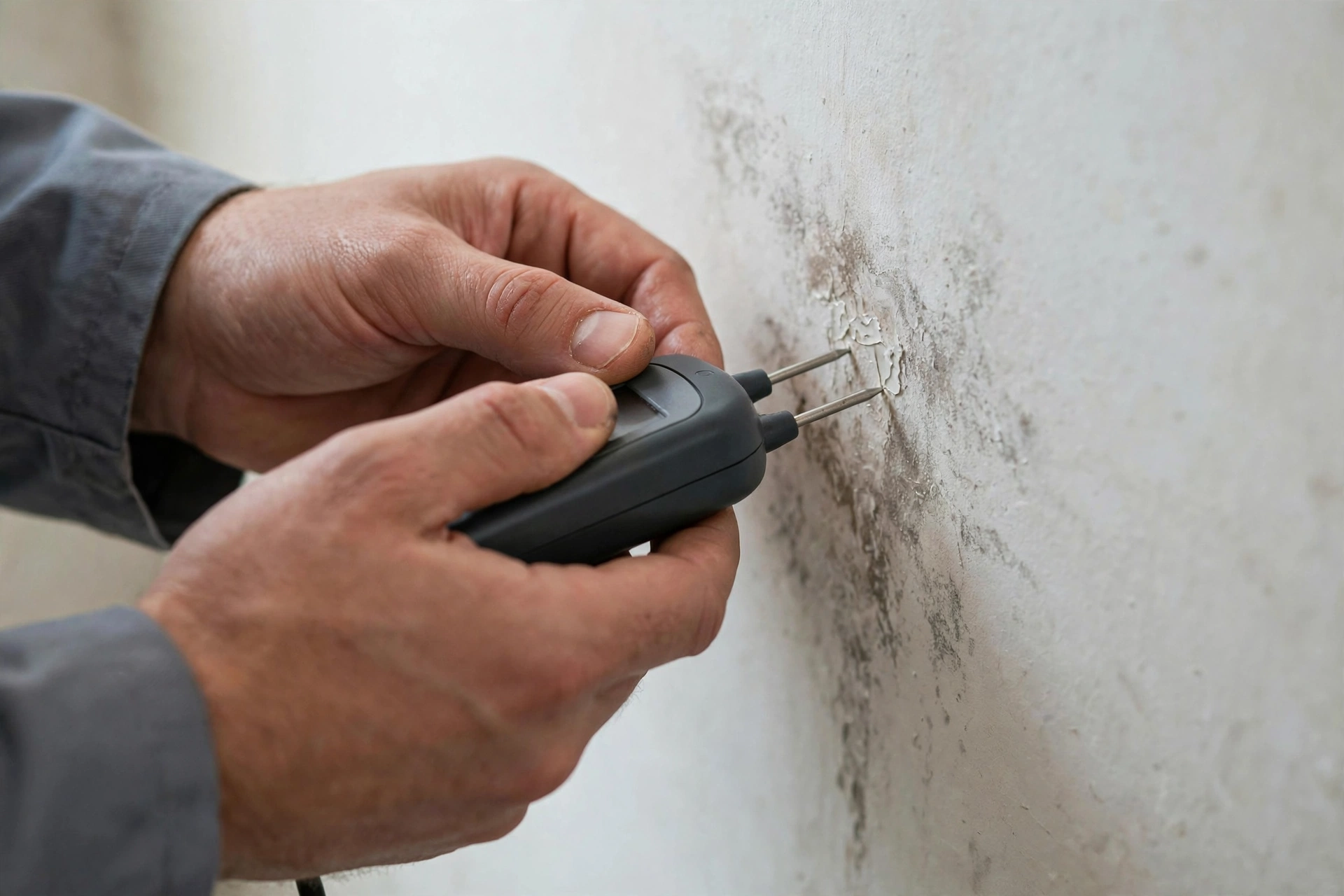
The meter test is the honest starting point for any suspected leak. With all fixtures off and irrigation shut down, the technician watches the water meter for movement and may record readings over a set interval. A meter that keeps turning confirms water is escaping somewhere in the pressurized system. Pressure testing sections of the plumbing then divides the home into zones, so the search focuses on the zone losing pressure. This staged approach avoids tearing into walls on suspicion and gives every later step a factual basis.
Moisture meters translate suspicion into measurement at surfaces. Pinless meters scan walls and floors for elevated moisture without leaving marks, while pin meters verify levels inside materials like baseboards and cabinet bottoms. Readings are compared against dry reference points in the same home, because Florida indoor humidity can raise baseline numbers. A moisture gradient, higher near the source and lower as you move away, points the search like an arrow. Documented readings also help you see progress later as drying brings levels back to normal.
Thermal imaging ties the system together by showing temperature patterns linked to water. Leaking hot lines warm their surroundings, evaporating moisture cools surfaces slightly, and wet insulation holds temperature differently from dry material. The camera makes those patterns visible across a whole wall or ceiling at once. It does not see through walls, but it shows where to test next with meters and listening equipment. Combined with the meter test results, thermal images help separate active leaks from old stains, which is a common question in older Bradenton homes.
Wall leaks often announce themselves indirectly: paint that bubbles at the base, baseboards that swell or separate, a cabinet that smells musty, or flooring that feels soft near a wall. Ceiling leaks usually trace back to bathrooms above, attic lines, or air handler condensate problems that mimic plumbing leaks. Distinguishing a true supply leak from a drain leak or condensation matters, because each needs a different repair. Pressure and meter testing separate pressurized leaks from the rest quickly, since only supply leaks move the meter when fixtures are off.
Yard leaks hide differently. A service line leaking in sandy Bradenton soil may never form a puddle, because water percolates down toward the high water table instead of surfacing. Clues include a meter that spins overnight, grass that stays greener in one strip, and soil that feels soft along the line route. Irrigation leaks complicate the picture, so zones are tested separately. During rainy season, from June to October, surface evidence washes away entirely, making instrument based detection the only reliable way to confirm and locate a yard leak.
Wherever the leak sits, the goal is a located source with a repair plan, not a series of exploratory holes. Wall openings, when needed, are small and placed at the confirmed leak point, often inside a cabinet or closet where patching is simple. Ceiling access follows the same discipline. Yard digging happens once, at the marked spot. If you are seeing stains, smelling mildew, or watching the meter move, call (941) 307-1712 so the search starts with testing rather than demolition.
Several signs point to a leak inside a wall rather than under the floor or in a fixture. Look for paint blistering or discoloration that grows over days, baseboards that warp or pull away, and a persistent musty odor in one room that cleaning does not fix. Touch matters too: a wall section that feels cooler or slightly damp, or flooring that is soft right at the wall line, suggests moisture inside the cavity. A meter test confirming water loss with no visible source strengthens the case considerably. It also helps to tell the technician about intermittent clues: a toilet that refills briefly for no reason, a water heater that fires more often than usual, or a hose bib that is always damp. Those small behaviors often mark the boundary between a fixture issue and a line issue. Sharing them at the start orders the testing efficiently and can save a return visit for a clue remembered afterward.
Confirmation comes from instruments, not demolition. Moisture meters map dampness across the wall surface and usually reveal a gradient centered near the leak, while thermal imaging shows the cool or warm pattern of water inside the cavity. Listening equipment at nearby fixtures can pick up the sound of the pressurized leak through the pipe itself. Only after those readings agree does anyone open the wall, and the opening is sized for the repair rather than the search. That order protects your finishes and your budget at the same time. Meter results are recorded, not just observed, so you can see the numbers yourself and compare them after repairs. A line that moved the meter before repair and holds still afterward is the clearest possible confirmation that the right leak was found and fixed. If readings remain ambiguous, the technician says so and explains what additional monitoring would settle it, rather than declaring a verdict the data does not support.
A water meter test answers the most important first question: is water escaping your pressurized plumbing when nothing is running. The technician ensures every fixture, appliance, and irrigation zone is off, then observes the meter dial or records readings over time. Any movement means water is going somewhere it should not, even if the loss is slow. The test can also estimate severity, since a fast spinning dial indicates a larger break while slow creep suggests a small, older leak that has been quietly adding to your bill. Old stains deserve special mention because they frighten homeowners long after the original problem was fixed. Moisture readings distinguish them quickly: a dry stain with normal readings is history, while an active leak keeps feeding moisture into surrounding material. Knowing which you have changes the plan completely, and it is a common relief in older Bradenton homes where decades of plumbing history are written on ceilings and inside cabinets.
The meter test also guides everything that follows. If the meter holds still, attention shifts to fixtures, drains, irrigation, or seasonal use patterns instead of hidden supply leaks. If it moves, zone by zone pressure testing isolates the loss to the slab lines, wall lines, or the yard service line. That sequence prevents wasted effort and gives you a clear, evidence based picture before repair options are discussed. Many Bradenton homeowners find the test alone worth the visit, because it replaces suspicion with a definite answer. When the search ends, you receive the same discipline in the summary: which system leaked, where the source sits, what evidence confirmed it, and what repair fits. If the leak turned out to be irrigation or a fixture, that is reported just as plainly, with the plumbing cleared by test results. Clear findings are the product of the visit, whether the answer is a repair project or simply peace of mind.
Straight answers before you call.
Describe the signs you are seeing and we will point you to the right next step.
Call (941) 307-1712Yes, especially in slab and wall plumbing where small leaks soak into soil, gravel beds, or wall cavities without surfacing. The water bill and the meter are often the first honest signals. Musty odors, minor paint changes, and soft spots usually follow later. A meter test confirms whether a hidden leak exists long before visible damage forces the issue.
Irrigation is tested as its own system. The controller and zone valves are shut down, then the meter is watched again. If movement stops, the leak is in the irrigation lines, valves, or heads.
Supply leaks are found with pressure, meter, and listening methods because they are pressurized and move the meter. Drain leaks behave differently and are investigated through moisture patterns, access points, and usage based testing, since drains only carry water when fixtures run. Your technician will explain which system the evidence points to and what testing applies to that system.
Avoid running water for a short period before the visit if you can, note when you noticed signs like bills or odors, and clear access to the water meter, water heater, and under sink cabinets. Mention recent plumbing repairs, irrigation work, or hurricane related damage.
Yes. Ceiling stains can come from roof leaks, air conditioning condensate problems, or bathroom seals above, as well as plumbing. That is why testing matters before opening anything. A meter test shows whether pressurized plumbing is losing water, and moisture patterns help separate an active plumbing leak from an old stain or a condensation issue that needs a different fix.
Slab leaks flooding your Bradenton home found and fixed fast, day or night.
Under-slab leaks pinpointed with acoustic and thermal tools before any concrete is cut.
Electronic listening and correlation equipment that hears the leaks your ears cannot.
A precise opening over the leak, a direct repair, and a clean concrete patch.
Call now and describe what is happening. We will take it from there.
Call (941) 307-1712