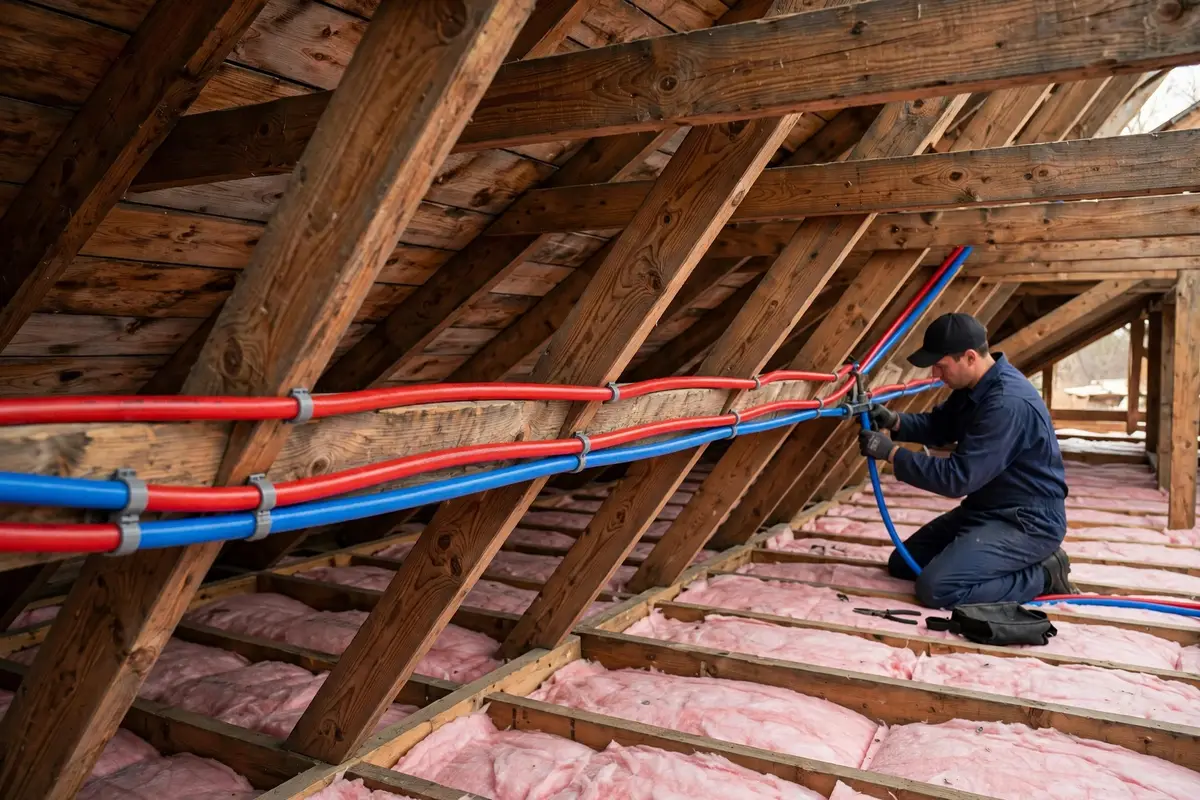
Professional pipe rerouting for Bradenton and Manatee County homes.
Pipe rerouting abandons the leaking line under your slab and replaces it with a new PEX line run through walls or the attic space instead. The buried pipe is capped and left out of service, so the leak path is gone for good. Rerouting suits aging Bradenton lines with repeat leaks. Call (941) 307-1712
Rerouting takes a completely different approach from digging: it leaves the failed pipe where it lies and gives the water a new path. A fresh line is run through walls, ceilings, or the attic to reconnect the fixtures the buried line served, and the old line is capped at both ends and taken out of service. The leak is solved because the leaking pipe no longer carries water at all. For Bradenton homes with deteriorating under slab plumbing, rerouting ends the cycle of leak, cut, patch, and repeat.
The approach fits Florida construction well. Slab-on-grade homes have accessible attic space above and wall cavities that accept new PEX lines with far less disruption than repeated concrete openings. Flexible PEX bends through framing with few fittings, and fewer fittings mean fewer future leak points. The work happens overhead and in walls rather than underfoot, so floors stay intact and most rooms remain usable during the project. Call (941) 307-1712 to discuss whether your home layout suits a reroute.
Rerouting is often the honest recommendation for the ranch homes built across Manatee County in the 1950s to the 1970s. Their buried copper and galvanized lines have served for decades in sandy, mineral active soil, and once one section fails from corrosion, its neighbors are usually close behind. A reroute replaces the whole problem run at once instead of betting on the remaining pipe. It also moves the plumbing to accessible spaces, so any future service is simpler and never involves cutting the slab again.
The new route is planned room by room before installation begins. The crew maps where the existing line enters the slab, where fixtures need supply, and the cleanest path through the attic or walls between them. PEX tubing is then run along that path, secured and insulated where conditions require, and connected to the manifold or main supply at one end and the fixture groups at the other. Wall openings for the work are small, planned at studs, and patched after testing, leaving far less restoration than a floor opening.
Attic runs in Florida need thoughtful detailing. Lines are positioned and insulated to protect against the heat that builds in Bradenton attics and the brief cold snaps that occasionally reach Manatee County. Routing avoids compressing insulation where possible and keeps lines accessible rather than buried under stored items. Drain down and shutoff considerations are built in so future maintenance is straightforward. When the new line is complete, it is pressure tested on its own before the old line is retired, proving the new path before it carries the home.
Partial reroutes are also possible when only one branch line has failed. A single leaking run to a bathroom group can be rerouted while the rest of the slab system stays in service, provided testing shows the remaining lines are sound. That flexibility lets the scope match the evidence: replace what is failing, keep what is proven. Over time, additional branches can be moved overhead as they age, gradually taking the whole home off its buried plumbing without one oversized project.
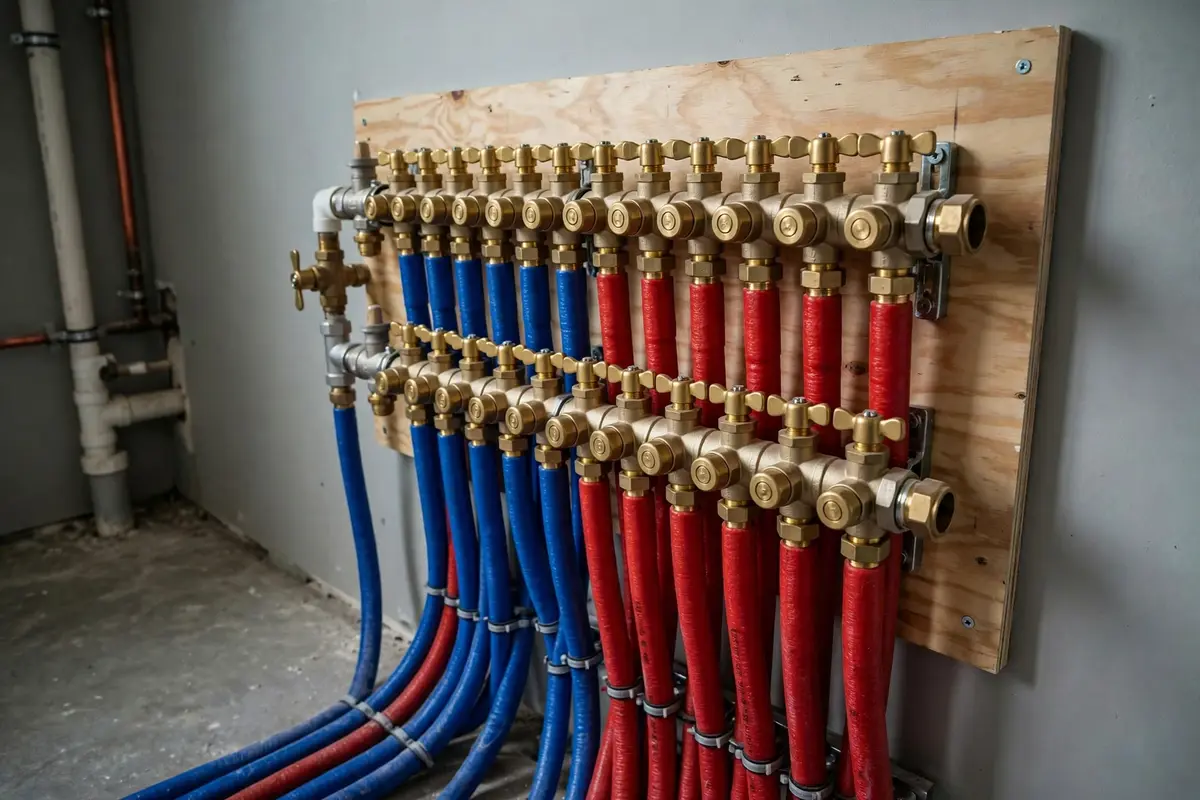
Many reroutes include a manifold, a central distribution point where each fixture group gets its own line and its own shutoff valve. Manifolds turn future maintenance from a whole house shutdown into a one fixture inconvenience. If a water heater or a single bathroom ever needs service, you close that one valve and the rest of the home keeps water. The manifold also balances pressure more evenly across fixtures, so a shower is less likely to notice a toilet flush elsewhere in the home.
Home run style manifold plumbing also reduces fittings hidden in walls, since each line runs continuously from manifold to fixture. Fewer concealed joints means fewer places a leak can start, and the joints that exist are concentrated at accessible points. For homeowners who have lived through a slab leak, that accessibility has real peace of mind value. You can see and reach your plumbing distribution instead of wondering what is happening under the concrete. Labeling at the manifold keeps the system understandable for everyone in the household.
Whether your reroute uses a manifold or a trunk and branch layout depends on home size, fixture layout, and attic geometry. Both approaches abandon the buried line permanently, which is the core goal. The choice is explained with its trade offs before work begins, including how each affects future access and any later additions like a bathroom remodel. Bradenton Slab Leak Pros designs the layout around your home rather than forcing one pattern, and the finished system is walked through with you valve by valve.
Rerouting beats spot repair when the buried pipe is failing as a system rather than at a single point. Clues include a second or third leak in the same line, corrosion visible at multiple exposed points, water chemistry that has thinned copper throughout the home, and galvanized sections that are closing down with internal rust. In those conditions, a spot repair fixes this month leak while the next weak section keeps aging toward its own failure. Rerouting spends the effort once and retires the whole deteriorated run. Cost comparisons should also count what each option protects. A reroute avoids cutting finished floors entirely in many homes, and it removes the risk of the next buried failure on that line, while a spot repair concentrates spending on the single break. Neither is automatically cheaper once flooring restoration and repeat risk are priced honestly. The written comparison you receive lays those factors out for your home rather than quoting national averages.
Layout and finishes can tip the decision too. A leak under custom tile, hardwood, or the middle of an open plan floor makes even a small opening costly to restore, while a reroute may pass overhead with no floor work at all. Homes already planning remodels often fold rerouting into the schedule. The comparison you receive covers disruption, longevity, and future access for your specific situation, not a generic script. It is common for Bradenton homeowners to choose the reroute after seeing both paths explained side by side. Sound planning also considers the fixtures you may add later. If a bathroom remodel or an outdoor kitchen is on your horizon, tell the crew during design, because sizing and routing choices made now can serve those plans instead of being redone. A reroute is a rare moment when the plumbing layout is open for improvement, and small adjustments at this stage cost far less than changes after walls are closed again.
The old pipe is abandoned in place, which is standard and safe practice when done correctly. Both ends of the buried line are cut and capped so it can never be pressurized again, and it is disconnected from the home supply so no water can enter it. An empty, capped pipe under the slab harms nothing: it carries no water, feeds no leak, and simply remains as inert material in the ground it has occupied for decades. The washout of soil stops because the water source is gone. Once the old line is capped, your water runs entirely on the new path, and the home returns to normal use with shutoffs labeled and the layout documented. Keep the documentation with the detection report, since together they describe the current state of a system that future owners and tradespeople cannot see. A rerouted home is easier to maintain, easier to remodel, and free of one entire category of hidden leak risk.
Documentation matters for abandoned lines. You receive a record of what was rerouted, where the new lines run, and where shutoffs and the manifold sit, which helps future plumbers, remodelers, and even future owners of the home. If soil voids formed while the old line leaked, that concern is assessed separately once water flow has stopped, since dry voids under a slab are stable but may warrant filling depending on size and location. The plumbing solution and the soil question are kept in the right order: water first, then assessment. If the soil assessment suggests voids worth filling, that work proceeds on its own schedule with the plumbing already proven tight, which is exactly the order foundation specialists prefer. The reroute therefore does more than move water: it creates the stable, dry conditions every other repair under the home depends on. Water first, structure second, finishes last is the sequence that keeps each trade working on solid ground.
Straight answers before you call.
Describe the signs you are seeing and we will point you to the right next step.
Call (941) 307-1712No. New lines run mainly through the attic, with small, planned wall openings only where connections are made or lines drop to fixtures. Those openings are patched after testing. Most Bradenton reroutes touch a handful of discrete spots rather than opening long wall runs, and rooms remain usable during the work.
Yes. Either line, or both, can be rerouted depending on which buried runs are failing. Hot lines are insulated along their new route to limit heat loss, and cold lines are positioned to avoid attic heat where practical. Detection and pressure testing identify exactly which lines need replacing so the scope covers the problem without replacing healthy plumbing unnecessarily.
The main factors are the length of new line needed, the number of fixtures served, attic accessibility, whether a manifold is included, and how much wall patching the route requires. Home size and layout matter more than any flat figure.
Yes, partial reroutes are common and sensible when testing proves the rest of the buried system is sound. The failed branch is capped off and replaced overhead while other lines remain in service. This staged approach spreads work over time and targets the piping that has actually failed.
A well designed reroute typically keeps pressure the same or improves it, especially when old galvanized lines had narrowed internally with rust. Hot water wait times depend on route length, and the layout is planned to keep runs as short and direct as the home allows.
Slab leaks flooding your Bradenton home found and fixed fast, day or night.
Under-slab leaks pinpointed with acoustic and thermal tools before any concrete is cut.
Electronic listening and correlation equipment that hears the leaks your ears cannot.
Hidden water leaks in walls, ceilings, and yards traced to their exact source.
Call now and describe what is happening. We will take it from there.
Call (941) 307-1712