How Much Pool Loss Is Normal Here
Florida sun, heat, and wind pull real water from a pool surface, and during the hottest Bradenton weeks daily evaporation is noticeable. Splash out, backwashing, and swimmers carrying water out on suits add more. Many owners refill on a routine without any leak being present at all. Screens, heaters, and salt systems all complicate the picture, so note recent pool work when you judge a sudden change. Normal loss still matters for water costs, even without any leak present.
What matters is change and comparison: a pool that suddenly needs filling far more often than the same season last year deserves a test. Cracks at the waterline, air in the pump, and damp spots in the yard near equipment are extra clues. The bucket test gives you a fair, same weather comparison at home. A pool that holds level all winter but drops fast in August may simply be meeting peak Florida evaporation at last.
The Bucket Test Step by Step
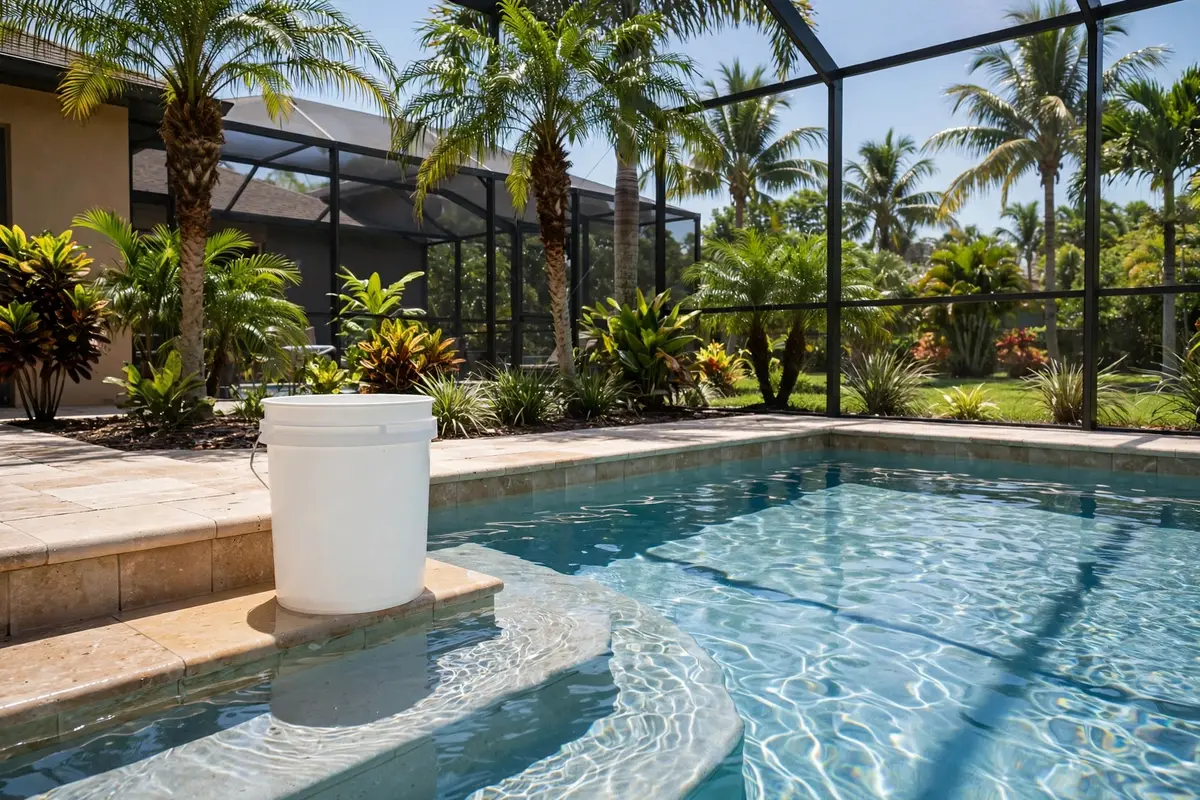
Fill a bucket with pool water and set it on a step so the rim sits above the surface, with pool water partway up its outside. Mark the inside water level and the outside pool level on the bucket. Turn off auto fill, fountains, and the pump timer if your setup allows a still test period. Weigh the bucket down if wind is expected, and choose a step where swimmers will not disturb it during testing. Keep children and pets away from the pool during the test day.
Wait a full day with normal weather, then compare the two marks. Both levels fall with evaporation, but the pool should fall at the same rate as the bucket. Keep pets from drinking from the bucket, and note any rain during the test, since rain raises both levels and can distort results. Mark levels with a wax pencil or tape at eye level, since small differences are the whole point here.
Reading Your Bucket Test Results
If the pool level dropped more than the bucket level over the same period, the extra loss is leaving through the shell, fittings, or plumbing, not the sky. Repeat the test once to confirm, ideally on a dry, calm day. Consistent extra loss across two tests is a solid reason to investigate further. Run the second test with the pump on its normal schedule if the first ran still, and compare both results. Two matching tests carry far more weight than one hurried attempt alone.
If both levels dropped together, evaporation explains the loss and refilling is simply Florida summer routine. Record the dates and measurements either way. Around Manatee County, afternoon storms in the rainy season interrupt many first attempts, so do not judge a test that included heavy rain midway through the day. A leak in buried plumbing often shows a bigger gap when the pump circulates, which is useful evidence to record.
Dye Testing Around Fittings
For a closer look, a small amount of dark food coloring squeezed near skimmers, returns, lights, and visible cracks can show water being drawn out, when the pump is off and the surface is still. Dye that drifts away lazily is normal movement; dye pulled sharply into a gap suggests a leak path. Test in the early morning before anyone swims, because even gentle ripples make the dye drift in misleading ways. Work in shade if you can, since glare hides the dye movement.
Work slowly on a calm morning and test one fitting at a time, noting any that pull dye in. This checks the shell and fittings, not buried lines, so a negative dye test does not clear the plumbing. Avoid entering the pool during testing, since movement stirs the water and ruins the effect. Keep a spare dye syringe kit sealed and dry, so you can retest a fitting after any seal work is done.
When Pool Loss Points Elsewhere
If the bucket test shows extra loss but dye checks find nothing, buried plumbing or equipment leaks move up the list. Wet ground near the pump pad, a meter that moves when the pool fill line is on, and damp under nearby patios or slabs all point that way and deserve professional detection. Air bubbles returning through jets and a pump that loses prime overnight also belong on your list of clues. Buried lines leave surface clues only after loss has continued a while.
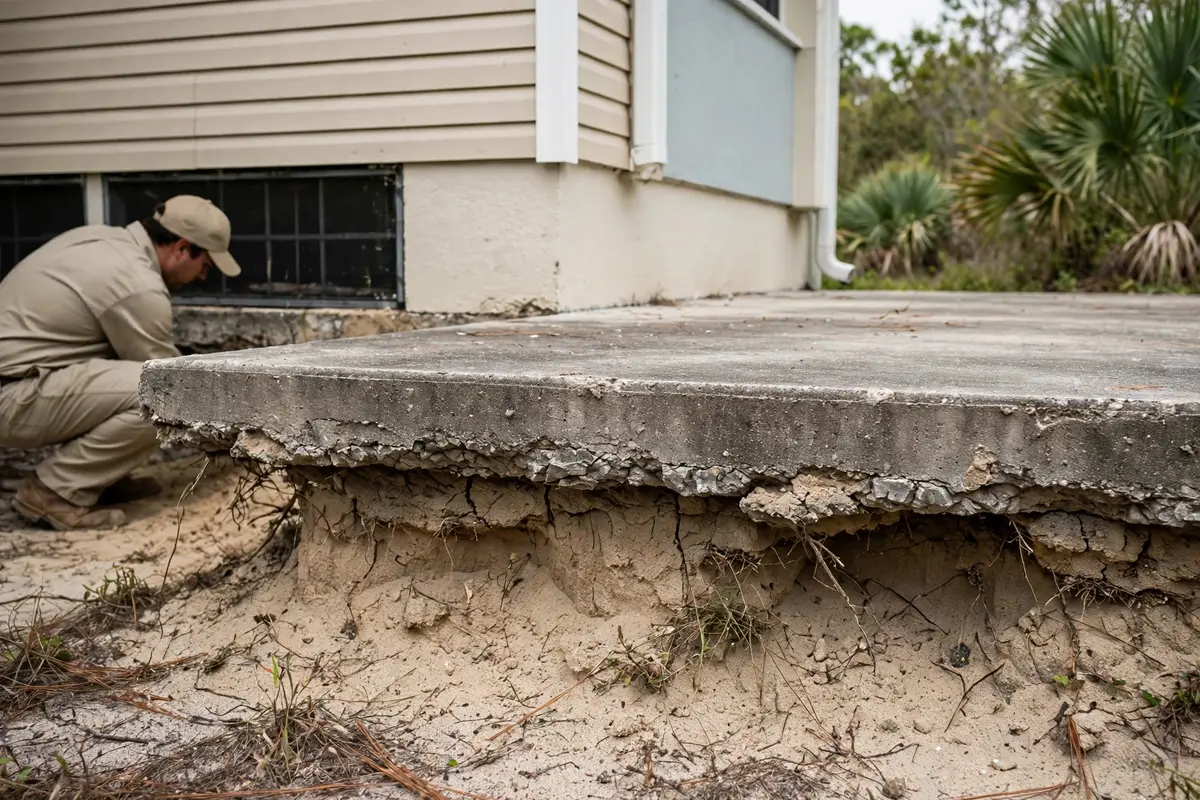
Homes near Anna Maria Island and along the coast often have pool decks on the same sandy base as the house slab, so persistent moisture deserves attention beyond the pool itself. To discuss what your test showed, call (941) 307-1712 with your measurements ready. Clear home test results make any follow up visit faster and more focused. Share bucket numbers, dye results, and equipment notes together, since the pattern across tests points to the right search area.
Questions About Pool Leak or Evaporation
How long should I run the bucket test for?
A full day gives a fair comparison, and repeating it once on another calm, dry day confirms the result. Short tests of a few hours are too sensitive to wind and splashing. Mark levels at the same time of day, and note any rain that fell during the period.
My pool loses more water only when the pump runs, what then?
Loss tied to pump running often points to the pressure side of the plumbing or equipment, rather than the shell. Note whether the extra loss happens only during filtration hours. Share that timing detail when you call, since it narrows where detection should start.
Can rain ruin the bucket test completely?
Heavy rain raises both levels and can hide a real difference, so a test day with a Florida downpour is best repeated. Light showers affect bucket and pool alike and usually cancel out. What matters is the difference between the two marks, not the absolute drop.
Does a pool leak affect the house slab nearby?
It can keep ground near the home saturated, especially where decks and patios meet the house, and that moisture complicates other leak signs. It does not prove a house slab leak by itself. If floors indoors feel damp too, arrange checks for both systems rather than assuming one cause.